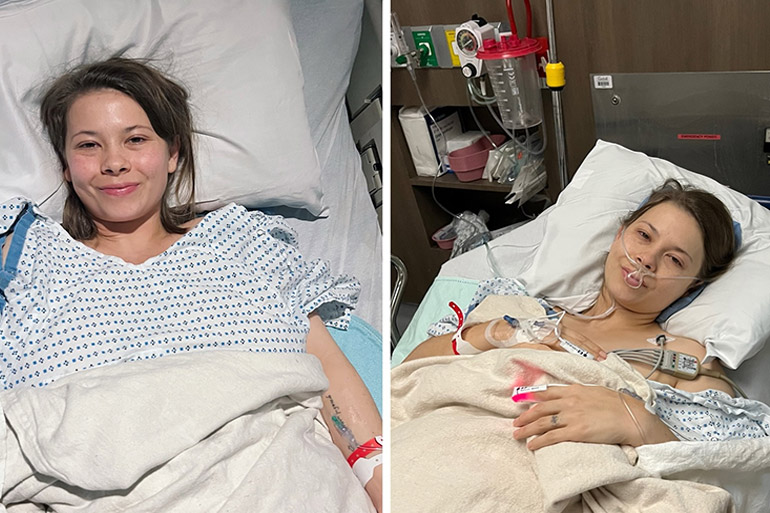
Bindi Irwin has shared another deeply personal, honest look at her experience with endometriosis, and it’s sparked an important conversation about a condition many women quietly live with.
Endometriosis affects a huge number of women, yet it is still brushed off far too often. Bindi’s story puts a spotlight on what it can really look like behind the scenes, especially when you spend years trying to be heard.
In a recent post, the beloved conservationist, mum and Aussie icon revealed that in the past three years she has had more than 50 endometriosis lesions removed. She also underwent surgery for a painful chocolate cyst, along with an appendectomy and hernia repair. It’s a confronting reminder of how serious this condition can be.
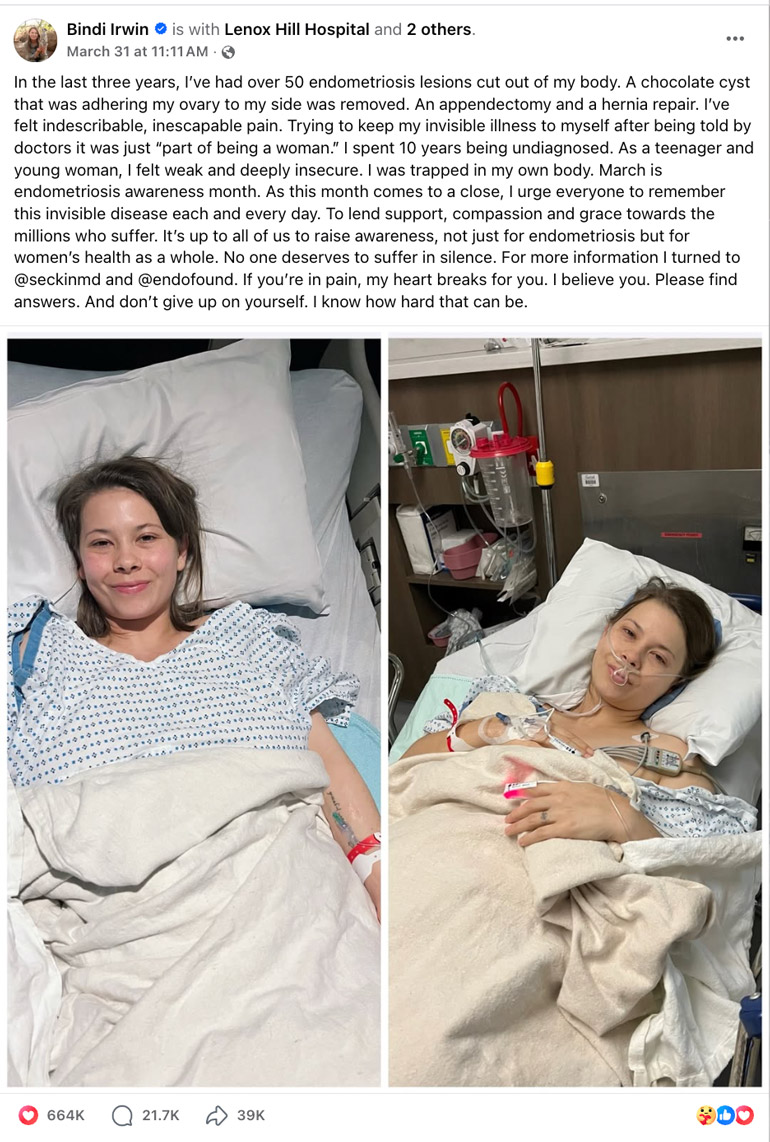
Ten Years of Being Dismissed
One of the hardest parts of Bindi’s story is how long it took to get a diagnosis.
Ten years of dealing with pain and not knowing why.
Ten years of being told it was just part of being a woman.
She spoke about feeling insecure and worn down as a teenager, struggling with symptoms she couldn’t explain. When concerns are dismissed like that, it chips away at your confidence. You start questioning your own body.
This is something many women relate to. Being told that pain is just “part of being a woman” does real damage. It makes you second guess yourself. It makes you stay quiet longer than you should. It makes you wonder if you’re overreacting.
When pain stops you living your life, it’s never something you should have to just put up with.
What Endometriosis Actually Does to the Body
Endometriosis is not just bad period pain. It’s a chronic condition where tissue similar to the lining of the uterus starts growing outside of it.
That tissue, known as lesions, can end up in places it has absolutely no business being, including:
- The ovaries
- Fallopian tubes
- The bladder
- The bowel
- The pelvic lining
These growths are called lesions, and they’re where most of the pain and damage comes from.
Lesions don’t just sit there quietly. They respond to hormones, especially oestrogen, which means they grow, thicken and break down during your cycle, just like uterine lining does.
The difference is, there’s nowhere for that tissue to go.
So instead, lesions can:
- Bleed internally during your cycle
- Irritate surrounding tissue
- Trigger ongoing inflammation
- Affect nearby organs and nerves
Over time, your body tries to heal that inflammation, which leads to scar tissue forming. That scar tissue can cause organs to stick together, known as adhesions. It’s how you end up with things like an ovary sticking to the pelvic wall or organs pulling against each other.
That pulling and sticking is a big reason the pain can feel sharp, constant, or hard to explain.
Lesions can also lead to:
- Chronic pelvic pain that isn’t just during your period
- Pain with movement or everyday activities
- Fertility issues if reproductive organs are affected
Bindi also shared that she had a chocolate cyst, which is a cyst filled with old blood that forms on the ovaries. In her case, it caused her ovary to stick to the side of her body, which is as painful as it sounds.
Living with Something You Can’t See
One of the hardest parts about endometriosis is that, from the outside, you can look completely fine. You can still show up. You can still smile. You can still get through the day. But underneath all of that, there can be constant pain, exhaustion, and frustration.
Bindi spoke about trying to keep her illness to herself, which is something so many women do without even realising it. You don’t want to seem dramatic. You don’t want to complain. You don’t want to be “that person”.
So you push through.
And pushing through can look like:
- Going to work while in pain
- Cancelling plans at the last minute
- Feeling guilty for needing rest
- Pretending everything is fine when it isn’t
Over time, that takes a toll. Not just physically, but emotionally too.
Why Talking About It Matters
Endometriosis affects a huge number of women, and yet it still takes years to diagnose. That gap between symptoms and answers is where so much unnecessary suffering happens.
The more we talk about it, the easier it becomes for someone to recognise their own symptoms and say, “Hey, this isn’t normal.”
Awareness leads to:
- Earlier conversations with doctors
- More confidence in speaking up
- Better understanding from partners, friends, and family
- A shift away from normalising pain
“I Believe You”
The most powerful part of Bindi’s message was simple.
“I believe you.”
That might not sound like much, but for someone who has spent years being dismissed, it means everything.
Because being believed is often the first step towards getting help.
If you’re dealing with pain that feels bigger than it should be, or something just doesn’t feel right, trust that instinct. Keep asking questions. Keep pushing for answers.
You deserve to feel well in your own body.
Bindi Irwin’s story is a reminder that endometriosis is real, it’s serious, and it’s far more common than many people realise. It’s not just about periods. It’s about chronic pain, delayed diagnoses, and learning to live in a body that doesn’t always cooperate.
But it’s also about speaking up, supporting each other, and changing the way we talk about women’s health. No one should have to spend a decade searching for answers. No one should be told their pain is just something to live with.
And no one should feel like they have to suffer in silence.
What to read next
- ’10 Years of Unbearable Pain’: Ricki-Lee Coulter Undergoes Surgery For Endometriosis
- ‘I Always Looked 6 Months Pregnant’: Woman’s Endometriosis Symptoms Ignored for 7 Years
- Amy Schumer’s Endometriosis Drives a Hysterectomy at 40