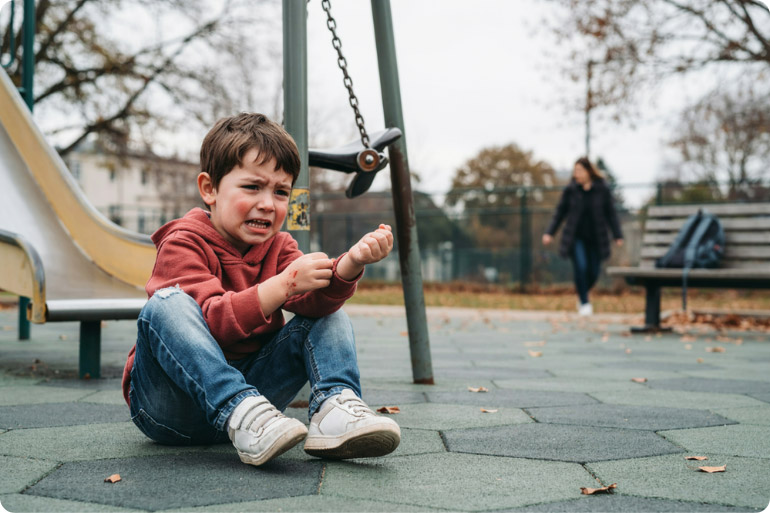
Child injured at the playground? Yeah, that sound. The thud, then the half-second of silence before the scream that tells you this one’s real.
One second your kid’s fine, the next you’re kneeling on concrete trying to work out if this is an ice pack situation or you need to call an ambulance. Maybe it was a cracked slide at your local park. A wet floor near the supermarket freezers with no sign in sight. A swing that gave way, or a café highchair that decided today was the day to betray you.
Here’s the thing. When a kid gets hurt in a public place, most of us go into full scramble mode and paperwork is absolutely the last thing on our minds. Which is totally understandable. But what you do in that first hour can matter a lot more than you’d think, especially if that sore wrist that seemed fine at 3pm turns out to be a hairline fracture by bedtime.
This isn’t about turning into a litigation-happy nightmare parent. Most bumps and scrapes are just … bumps and scrapes. But playground injuries in Australia do sometimes come down to someone else’s stuff-up, and knowing what to do means you’ve got options if things turn serious.
Think of it as the parenting toolkit you hope you never need. Like the Poisons Information number on the fridge. Like the spare batteries in the smoke alarm. Just quietly good to know.
Child injured at the playground? Here’s what to do, step by step
1. Call 000 if you need to. Don’t second-guess yourself.
Your only job in the first few minutes is your kid. That’s it.
Watch for anything that needs urgent attention: a head knock followed by vomiting or drowsiness, a limb sitting at a wrong angle, a cut that won’t stop bleeding, trouble breathing. If any of that’s happening, call 000. Don’t drive a possible head or spinal injury yourself if you can help it.
If it looks less serious, still take it seriously. Kids are resilient little things and they’ll often say “I’m fine” purely because they want to get back on the swings. That sore wrist that seemed okay at 3pm can turn into a hairline fracture by bedtime. Head knocks especially have a nasty habit of showing up hours later.
Once your child is safe and calm, and only then, start noticing what’s around you.
2. Child injured at the playground? Document the scene before you leave.
This is the bit almost every parent forgets, because you’re shaken and every ounce of you is focused on your kid. If another adult is with you, hand them your phone and put them on scene duty immediately.
Whether your child was injured at the playground, a shopping centre, a pool or a council park, capture everything you can before you leave:
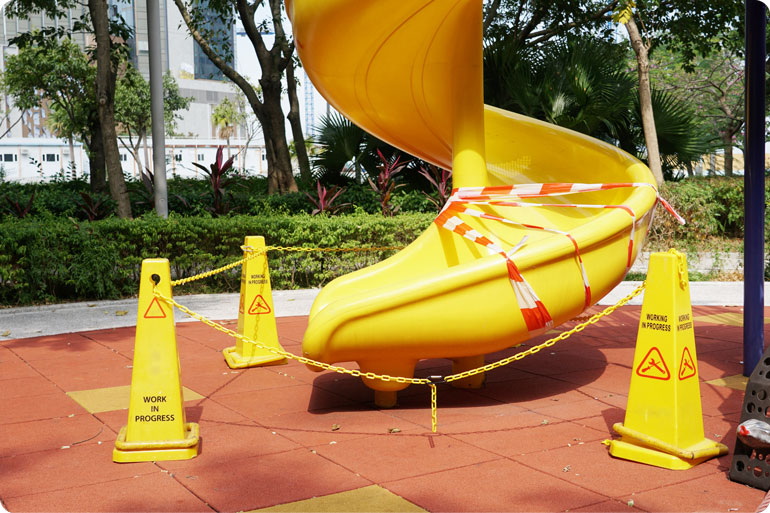
- Photos of whatever caused it. The broken equipment, the wet floor, the missing warning sign, the uneven paver. Wide shots and close-ups.
- Names and numbers of anyone who saw it happen. A stranger’s account carries real weight and they will almost never track you down later to give it.
- The time, the exact location, and the weather or lighting if it’s relevant.
Take the photos even if you feel a bit silly doing it while your kid is still crying. You can always delete them. You cannot go back tomorrow and photograph a hazard that’s already been fixed.
3. Tell staff and make sure they actually record it
If staff are around, tell them straight away and ask them to write it down. “We’ll sort it” and a vague nod is not good enough. You want it on their record, not floating around in someone’s memory.
Don’t leave without seeing them actually write something down, or getting a name.
4. See a doctor, even if your child seems actually fine
Seriously. Even if they’ve stopped crying and are asking for a Zooper Dooper.
A GP visit or ED trip does two things. It rules out anything that’s been missed, and it creates a dated medical record linking the playground injury to the exact day it happened. That link matters enormously if something shows up weeks later that you didn’t see coming.
Keep copies of everything: GP notes, X-ray results, referrals, receipts for anything you’ve paid for. A folder on your phone is fine. Also jot down how the injury is affecting your kid day-to-day: missed school, rubbish sleep, sore nights, things they can’t do right now.
None of this is about building a case. It’s about not having to reconstruct everything from memory three months later when the details have gone fuzzy, and your kid has completely forgotten it happened.
5. Lodge a child injury incident report in writing, not just in person
This is the step most parents skip entirely. Don’t.
Telling a staff member is a start. It is not enough on its own. Lodging a child injury incident report in writing means there’s a dated record that doesn’t rely on anyone’s memory of a five-second conversation at a busy front desk.
Most shopping centres, councils, pools and play centres have a formal incident report process, and you’re entitled to ask for it. Put your version in writing too, even if it’s just a short email. Keep it factual: what happened, where, when, what caused it. Ask for a copy and a reference number.
If you’re wondering what to do if your child gets hurt at a shopping centre or on council land, lodge the report with the venue AND directly with council or centre management. Most councils list this under “report a hazard” on their website. Get written confirmation they received it.
That written report is often the single most useful thing you’ll have if things turn out to be more serious than they first looked.
6. Know when a public place injury claim might actually apply
Kids fall over. That’s basically their full-time job, and most of the time it’s just bad luck and a grazed knee.
But every so often, a child injured at the playground or in a public place is genuinely down to someone else not doing their job properly, and that’s a different situation entirely. Public place injury claims in Australia come down to whether the venue was kept reasonably safe, which is exactly why the steps above matter so much.
Public liability claims for playground injuries in Australia have strict time limits that vary by state, and some are shorter than you’d expect when kids are involved. Firms like Smith’s Lawyers, which has run public liability claims on a No Win, No Fee basis since 1996, can usually tell you in one phone call whether there’s anything worth pursuing. The first chat is free, no obligation whatsoever.
Ask two things: is there a claim here, and how long do I have to act? Even if the answer is “nah, nothing here”, at least you’ll stop wondering about it.
7. Don’t stress if you didn’t do all of this at the time
Most parents don’t. You were in shock, your kid was upset, and filing an incident report was the last thing on your mind. That’s completely normal.
If your kid was hurt in a public place and you didn’t report it, do it now. Write down everything you remember, get to a doctor, lodge a late report. Not ideal, but genuinely miles better than nothing.
Playground Injury FAQs
Q: Should I see a doctor if my child seems totally fine after a playground injury in Australia?
Yes. Always. Head knocks especially can show up hours later, and a dated medical record protects you either way.
Q: The venue offered to cover the doctor’s bill after my kid was hurt in a public place. Should I take it?
Accepting help is fine, but don’t sign anything that waives your rights in exchange for it. If it’s a minor injury, that’s probably the end of it. If it’s not, get advice before you sign a single thing.
Q: How long do I have to make a public place injury claim in Australia?
It varies by state, and some cut-offs are shorter than you’d expect, especially where kids are involved. An early call to a lawyer costs nothing and helps you avoid missing the window.
Q: What if I didn’t take photos or lodge a child injury incident report at the time?
Do it now. Write everything down while it’s still reasonably fresh. Better late than never, genuinely.
None of this means treating every grazed knee like a courtroom drama. It just means that on the one day something genuinely goes wrong on someone else’s watch, you’ve already done the quiet, boring bits that keep your options open. File it away with the other stuff you hope you never need, like the Poisons Information number and the spare key under the fake rock.