
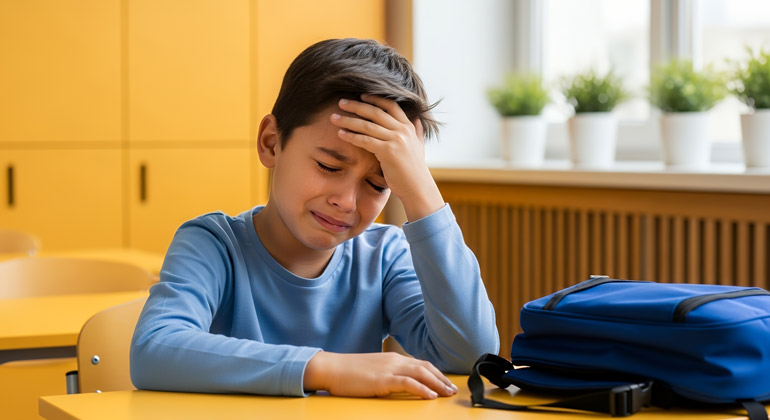
Picture this: It’s a Tuesday morning. Your child says their tummy hurts. You’re running late, the lunchbox isn’t packed, and, honestly … you think about it for a second. One day won’t hurt, right? But when these mornings start happening more often, it could be more than a rough start to the day—it could be school refusal.
Except new data suggests a lot of Australian families are having that same thought. A lot. And it’s adding up to a full-blown attendance crisis that has education experts seriously worried.
According to new figures, close to half of all Australian school students (nearly 2 million kids) are now classified as “chronically absent,“ meaning they’re missing school for more than 10% of school days each year. That’s roughly one day every two weeks, or about four weeks of learning gone every single year.
And it’s been getting worse since COVID, with national attendance rates dropping from 91.3% to just 85.7% over the past six years.
So what on earth is going on?
School Refusal is Not Just Sickie Days (Though Those Count Too)
Let’s be clear: this isn’t a story about lazy parents or kids bunking off to play video games (well, mostly). The research points to a whole mix of reasons that will sound very familiar to anyone raising school-age kids right now.
Anxiety and school refusal are among the biggest contributors. With mental health challenges on the rise for children and teens, more kids are genuinely struggling to walk through those school gates every morning, and it’s not something a stern word over breakfast fixes.
Bullying remains a significant factor too, along with a growing sense of disconnection from school life and the curriculum. Kids who don’t feel like they belong, or who find the content irrelevant to their lives, are far more likely to find reasons not to show up.
Kids with autism and ADHD are disproportionately affected, with research showing this group is more likely to refuse school altogether, often because the environment doesn’t work for their needs.
And yes, there’s also the screen factor. New research has found that children who are heavily dependent on internet use, or gaming, are about 1.3 times more likely to miss school. Not a massive multiplier, but not nothing either.
Why Does It Matter So Much?
If your child misses 10% of school, that might not feel like a big deal. But stack that up across primary school and high school, and you’re looking at over a year of missed learning by the time they finish Year 12.
Educators say chronic absence doesn’t just affect grades. It affects friendships, confidence, and the ability to re-engage after a break. The longer the pattern goes on, the harder it is to reverse.
The impact is also felt unevenly. Students in regional and remote areas already face attendance rates as low as 81%, compared to 89% in cities. And children from disadvantaged backgrounds are more likely to start missing school in the early years, which sets up a tough cycle.

What Can Parents Actually Do?
First up: you’re not being accused of anything here. The data isn’t a judgement on individual families. It’s a flag that the system as a whole needs attention. But there are a few things that genuinely help at home.
- Talk to your child about what school feels like for them. Not just “how was your day?” but proper conversations about whether they feel safe, whether they have friends, whether anything feels hard. Sometimes kids go quiet about problems long before they start refusing to go.
- Take patterns seriously, not just individual days. One sick day is fine. Three Mondays in a row is a pattern worth exploring. If your child is finding excuses every week, it’s worth a gentle but honest conversation, and possibly a chat with their teacher.
- Stay connected with the school. Teachers often notice things parents don’t. If something is off in the classroom (socially, academically, emotionally) they’re usually your best first port of call.
- Don’t panic, but don’t dismiss it either. School anxiety and school refusal are real conditions that respond really well to early support. If your gut is telling you something is more than run-of-the-mill reluctance, trust that instinct and reach out to your GP or school counsellor.
The Bigger Picture
Australia’s school attendance crisis is real, and it’s going to take more than individual families pulling their socks up to fix it. Schools and governments need to look hard at what’s making kids disengage: the mental health pressures, the learning environments, the lack of support for kids with additional needs.
But in the meantime? Knowing the numbers, having the conversations, and showing up for our kids (even when showing up feels hard) is where it starts.
After all, we’re mums. We’ve been doing hard things before breakfast for years. We’ve got this.
Frequently Asked Questions
1. What is school refusal?
School refusal is when a child regularly struggles or refuses to attend school due to emotional distress, such as anxiety, fear or feeling overwhelmed. It’s different from simply wagging school or taking the occasional sick day, and often requires understanding and support rather than punishment.
2. What causes school refusal?
There isn’t one single cause of school refusal. Common reasons include anxiety, bullying, learning difficulties, autism, ADHD, friendship issues, family changes or feeling disconnected from school. Identifying the underlying cause is the first step towards helping your child.
3. How do I know if my child is experiencing school refusal?
If your child frequently complains of headaches, tummy aches or feeling unwell before school, becomes distressed at drop-off, or regularly asks to stay home without a clear medical reason, it may be more than ordinary reluctance. Persistent patterns are worth discussing with your child’s teacher, GP or school counsellor.
4. How can parents support a child with school refusal?
Start by listening without judgement and encouraging open conversations about how your child feels. Work closely with their school, look for patterns in their behaviour and seek professional support if the problem continues. Early intervention often leads to better outcomes.
5. Can children overcome school refusal?
Yes. With the right support, many children successfully overcome school refusal. Identifying the cause, creating a supportive plan with the school and accessing professional help when needed can help children rebuild their confidence and return to regular school attendance over time.
You might also like:
- School Anxiety: Expert Strategies to Help Your Child Cope
- Dear Anxiety, Please Go Away: 7 Clever Tricks to Reduce Anxiety Attacks
- What to Do When Your Child Absolutely Hates School




1 Comment
Some children with Autism or Aspergers who refuse to go to school are very intelligent.
Some are a lot further advanced in learning than others and are simply bored. They may have actually read the information before they are taught the information in class. If they do their allotted exams they finish them in a short time compared to normal. These children should be assessed as they may best jump a year. They then learn at the same rate as the next class / grade they move into for awhile.