
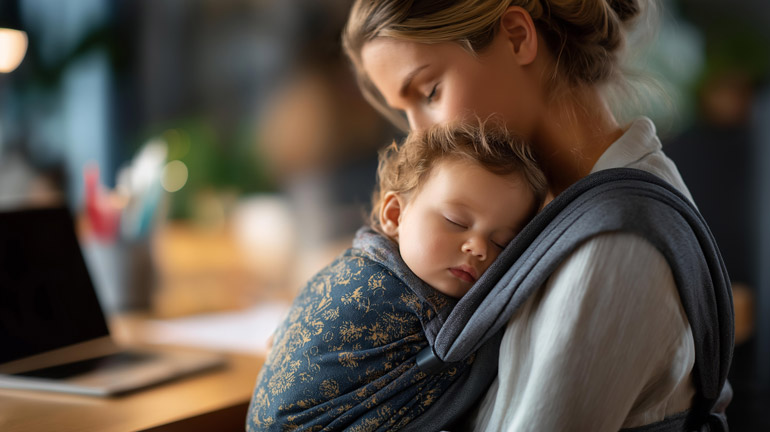
It’s 2 PM and your baby is glued to your chest while the laundry glares at you from the corner. Your coffee is a sad, cold puddle, your hair is staging a rebellion, and you’re seriously questioning how anyone survives motherhood without a mental meltdown.
Sound familiar? Welcome to the club.
Some babies simply want to be close. All the time. And while those endless cuddles are beautiful, they can also make everyday life feel impossible. That’s where babywearing comes in.
Babywearing isn’t just about having your hands free. It’s about keeping your little human calm, connected and comforted while you move through real life. Whether it’s a wrap, sling or structured carrier, babywearing lets you stay close to your baby while still existing in the world around you.
The newborn stage is intense whether it’s your first baby or your fourth. Endless feeds, contact naps, sleepless nights and supermarket trips that somehow feel like Olympic-level events. Babywearing can make those early months feel a little more manageable, giving your baby the closeness they crave while helping you navigate the chaos of everyday life.
For many mums, it quickly becomes less of a “parenting hack” and more of a survival tool.
What Is Babywearing and Why Do Parents Love It?
Babywearing can look different for every family. Some parents love the softness of wraps for newborn cuddles, while others prefer the structure of buckle carriers for longer outings. The good news is there’s no single “right” way to do it … just the option that works best for you and your baby.
Types of Baby Carriers: Wraps, Slings and Structured Carriers Explained
Stretchy Wraps – Perfect for Newborn Snuggles
Stretchy wraps are soft, snug, and perfect for those first few months of babywearing when your newborn just wants to be held all the time. They curve around your little one, giving them warmth and security while letting you move your arms just enough to grab a coffee or fold some laundry. They take a bit of practice to tie properly, but once you get it, it’s like a wearable cuddle.
Ring Slings – Perfect for Quick On and Off
Ring slings are the ultimate grab-and-go option. Perfect for short errands or feeding on the fly, you can sling your baby on in seconds and adjust it easily as they grow. They give one-shoulder support, which is handy when you only have a spare arm to hold your keys or grocery bag.
Soft Structured Carriers with Buckles – Perfect for Longer Adventures
If you’re planning a full day out, soft structured carriers are your survival tool. With padded straps and easy buckles, they take the strain off your arms and shoulders while keeping your baby secure. They’re ideal for walks, travel, or any situation where you need hands-free freedom for a few hours.
Hip Seat Carriers for Quick Support
Hip seat carriers are great for babies who want to be picked up and put down constantly. They have a small padded seat that sits on your hip, giving your baby a place to sit while taking the pressure off your arms and lower back. They’re perfect for older babies and toddlers who like to look around but still want to stay close. Many designs also include an optional carrier attachment for extra support during longer outings.
Meh Dai Carriers – Perfect for Comfort and Versatility
Meh dai carriers are a cross between wraps and structured carriers. They’re comfortable, adjustable, and let you switch between front, back, or hip carries without fuss. Great for mums who want versatility and a carrier that grows with their baby.

Why Mums Love Babywearing
Mums love babywearing for plenty of reasons:
- Hands-free parenting so you can hold a coffee or wrangle a toddler
- Settling fussy babies faster than any rocking chair
- Bonding and closeness that nothing else quite replaces
- Easier outings when prams become a logistical nightmare
- Easy access to that beautiful baby smell on demand
- Keeps well-meaning strangers from grabbing your baby in public
- A very convenient place to stash emergency snacks or chocolate
The Science Behind Babywearing
Babywearing isn’t just about convenience. Research shows it can have real benefits for babies too.
Regulates Baby’s Temperature and Heartbeat
When your baby is snuggled against you, their body can mirror your warmth and rhythm. This helps stabilise their temperature and heartbeat, keeping them calmer and more comfortable, especially in those first few weeks when everything feels huge and overwhelming to them.
Promotes Attachment and Emotional Bonding
Being close to your parent releases oxytocin for both you and your baby, aka the “love hormone” that strengthens your bond. Babywearing encourages eye contact, gentle touch, and comfort, helping them feel safe and secure while supporting your emotional connection during these early, formative months.
Supports Healthy Development
Properly positioned carriers support your baby’s spine and hips, promoting safe physical development. Front carries can also encourage head control and muscle strength, while the closeness and gentle movement mimic the sensations babies are used to from the womb, helping them settle and grow confidently.
Babywearing Safety Tips Every Parent Should Know
Babywearing is amazing, but safety comes first. A properly worn carrier keeps your baby secure, comfortable, and happy, and it gives you peace of mind so you can get stuff done.
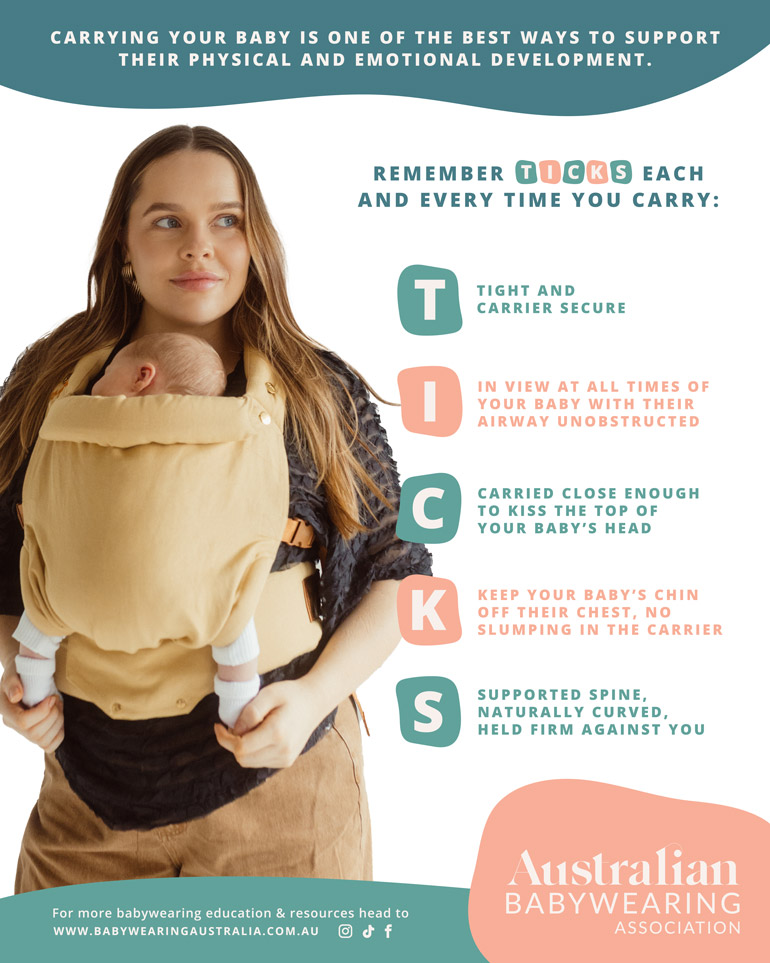
Follow the TICKS Rule for Safe Babywearing
To make it even easier to remember safe positioning, follow the TICKS rule:
- Tight – Your baby should be held snugly against you.
- In view at all times – Keep baby’s face visible.
- Close enough to kiss – Baby should be high on your chest.
- Keep chin off chest – Ensure the airway is clear.
- Supported back – Baby’s spine should be supported and able to curve naturally.
Ensure Correct Positioning for Healthy Hips and Spine
Baby should be in the “M position,” with knees higher than their bottom and legs spread naturally around your torso. This helps support healthy hip development and prevents strain on their spine. Make sure their back is supported but still able to curve naturally. The carrier should hold your baby snugly against you so they feel secure but not squashed.
Follow Age and Weight Guidelines for Your Chosen Carrier
Always follow the weight and age guidelines for your carrier. Stretchy wraps are usually best for newborns, while structured carriers are good for older babies and toddlers. Adjust straps or ties so the carrier fits both you and your baby comfortably.
Other Handy Safety Tips
- Make sure your carrier is snug enough so your baby can’t slump down.
- Keep your baby upright to help with reflux and breathing.
- Avoid activities that could be risky while wearing your baby, like cooking over a hot stove or carrying sharp objects.
Used properly, babywearing is safe and gives you close cuddles without the worry.
Common Babywearing Questions Mums Ask
Will it spoil my baby?
Not at all. Babies are designed to be close to their parents. Being held doesn’t make them clingy for life. It just helps them feel safe, calm, and loved.
Is it bad for their hips?
Only if the carrier is used incorrectly. Make sure your baby’s legs are in the “M position” with knees higher than their bottom. This supports healthy hip and spine development.
Is it hard to learn?
Like anything new, practice makes perfect. Wraps and slings can take a few tries to tie comfortably, but once you get it, it becomes second nature.
Can I breastfeed while babywearing?
Yes. With the right carrier and positioning, you can nurse discreetly without taking your baby out of the wrap or sling.
Can I wear my baby while cooking or doing chores?
Yes, but be careful. Avoid anything hot, sharp or risky. Consider back-carrying for older babies, or safer options like slow cookers and pre-prepped meals.
Babywearing frees your hands, but it doesn’t make risky tasks safe.
Key safety tips: bend your knees instead of leaning over, keep hot pots on the back burners, and double-check that your carrier is snug and secure.
How long can I wear my baby at a time?
There’s no strict limit. Just make sure your baby is positioned correctly, their airway is clear, and both of you feel comfortable and supported.
Is it safe for older babies or toddlers?
Absolutely. Structured carriers and meh dai carriers can support bigger babies, giving you hands-free freedom while keeping them secure.
When Babywearing Is Most Helpful for New Parents
Newborn Stage
Babywearing is a total lifesaver when your little one wants to be held all day, every day. Those endless cuddles and constant need for comfort can leave you feeling like a human hammock, but a wrap or sling keeps your baby snug while giving you a chance to move, grab a coffee, or even fold a bit of laundry.
Travel and Errands
Prams are great until you’re juggling stairs, crowded shops, or a tiny car boot. A carrier makes getting out of the house way easier. Whether it’s a trip to the shops or a weekend away, babywearing keeps your hands free and your baby secure.
School Drop-Offs
If you have older kids, mornings can feel like a chaotic obstacle course. Babywearing lets you carry your youngest while helping the older ones with backpacks, shoes, and last-minute lunchbox disasters without losing your mind.
Contact Naps
Some babies just need to be held to sleep. A carrier or wrap lets them snooze safely on your chest while you get a bit of life back. It’s the perfect way to sneak in those precious naps without sitting on the couch all day.
Babywearing Tips for Sweltering Aussie Summers
Summer babywearing can feel like a sauna session. Try these quick tips:
- Lightweight, breathable fabrics like cotton or linen
- Walks early morning or evening
- Shade baby’s head with a hat or wrap
- Stay hydrated and offer fluids if old enough
- Take breaks if baby seems fussy or hot
With the right carrier, and timing, babywearing in summer can be doable. Keep it light, shady, and listen to your baby. You’ll stay close, hands-free, and survive the heat without losing your mind.
Babywearing is more than a trend. For many parents it becomes a lifeline during those exhausting early months — a way to keep your baby close while still moving through daily life.
It helps calm unsettled babies, strengthens your bond, and gives you the freedom to get things done without putting your little one down.
Your coffee might still go cold. The laundry might still pile up. But babywearing lets you navigate the chaos of early motherhood with a little more sanity, and a lot more cuddles.
weWhat to read next
- Kangatraining: See Why it’s the Best Fitness Activity for Babywearing Mums
- Move Over Baby Showers – Nesting Parties Are the New Trend for Expecting Mums
- The Fourth Trimester: What Every New Mum Needs to Know




1 Comment
In hot weather your baby may not like your body heat. One of ours hated being held while drinking the bottle.