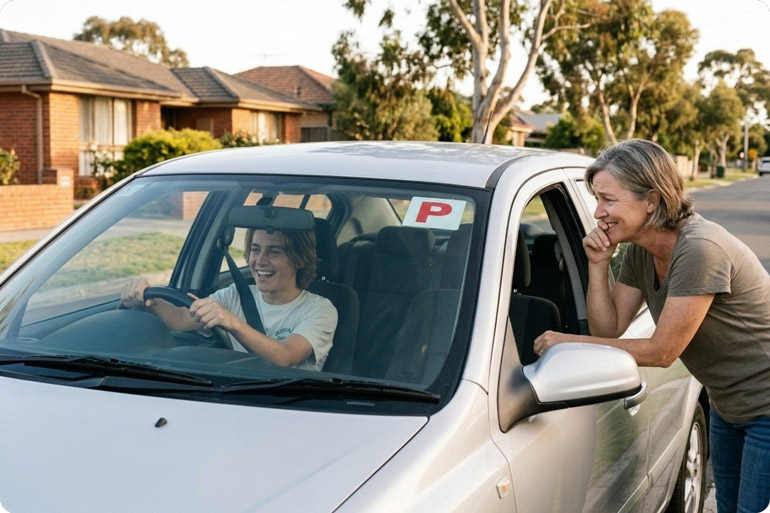
There is a very particular moment every parent of a teenager eventually reaches. Your kid holds up a plastic card with a terrible photo on it, grins like they have won something, and then asks for the keys to the car you rely on for school runs, grocery hauls and getting to work on time.
We are proud. Somewhere underneath that, we are quietly calculating how much a new bumper costs.
Handing over the household vehicle to a brand new licence holder is one of those milestones nobody really prepares us for. The licence itself gets all the attention. What follows, the paperwork and the phone call to the insurer, tends to get sorted in a rush on a Tuesday night. So let us slow down and walk through it properly, because choosing Comprehensive vs Third Party Car Insurance is a genuine fork in the road for the household budget.
What actually changes when a young driver joins the policy
Insurers price risk based on experience, and newly licensed drivers simply have not built any yet. That is not a judgement on your kid. Reflexes take time to develop, hazard awareness takes longer, and everyone drives a bit differently in their first year than they will in their tenth.
a
Once a young driver is listed on your policy, three things typically shift.
- Your premium changes. How much depends on the vehicle, where you live, the level of cover and the individual circumstances of everyone listed. Insurers assess each policy separately, so no universal figure exists to plan around.
- Your excess may change. Many policies carry an additional age-based excess that applies when a driver under 25 was behind the wheel at the time of an incident. Ask about this specifically, because it only bites at claim time.
- Your choice of cover matters more. A minor scrape becomes far more likely across the first couple of years, and cover level determines who pays for what.
None of that means you should hide the fact your teenager drives your car. Leaving a regular driver off a policy can create real problems if something happens, and honesty here protects everyone.
Comprehensive vs Third Party Car Insurance explained without the jargon
Third-party sounds vague, so here is the plain version. The “third party” is the other person. Not you, not your insurer, but whoever else ends up involved.
Third Party Property Damage covers damage your driver causes to somebody else’s car or property. If your son reverses into a neighbour’s fence, or your daughter clips a parked ute outside netball, this level of cover is designed for exactly that. Some policies also cover damage to your own car when an uninsured driver causes it. Left out, though, is damage to your own car whenever your driver caused it. Fire and theft are excluded too.
Third Party Fire and Theft does all of that, and adds protection should the car be stolen or burn.
Both options sit at the more affordable end. For plenty of families, particularly those running an older second car worth a few thousand dollars, that trade-off makes sense. Where a car is not worth much more than a year of higher premiums, paying to insure it against your driver’s mistakes may not stack up.
Worth remembering too: compulsory third party insurance is a separate thing entirely. Known as a Green Slip in New South Wales, CTP is legally required and covers injury to people, not damage to vehicles. Everything discussed here sits on top of that.
What comprehensive cover adds to the picture
Comprehensive is the tier that steps in when your household is the one at fault. Damage from a collision, accidental damage to other people’s property, vandalism, theft, fire and severe weather all sit inside it.
The detail worth knowing is that comprehensive is not one flat product. Insurers usually offer tiers, and the differences between them are meaningful. An entry-level version keeps costs down but locks out optional extras. A mid-tier policy often brings in new vehicle replacement and cover for personal items left inside, along with the option to add a replacement vehicle after an incident. Top-tier policies bundle those extras in automatically and lift the limits on things like daily hire and taxi fares.
Because families weighing this up with a P-plater in the house are usually comparing across a whole range, it helps to see the tiers laid out together. The NRMA comprehensive car insurance breakdown for drivers under 25 does that, and it also makes a point worth noting: there is generally no separate young-driver product. Your teenager takes up the same policies everyone else does, priced for their circumstances.
That last detail surprises a lot of parents who assume a special youth policy exists somewhere.
Five questions that make the decision easier
Rather than starting with price, start with these.
- What is the car genuinely worth today? Look up a realistic private sale figure. If replacing the vehicle would flatten your savings, comprehensive earns its keep. If you could absorb the loss without much drama, third-party may be enough.
- Could you cope without the car for a month? Repairs take time. Households juggling shift work, school drop-offs and after-school sport often find that benefit matters more than expected.
- Where does the car sleep? A vehicle parked on a busy street carries different exposure to one behind a locked garage. Fire and theft protection is worth more in some postcodes than others.
- How much driving will your teen actually do? A licence used twice a week for a shift at the local cafe is a different picture to a daily commute across the city.
- What happens to the budget if you claim tomorrow? Add the basic excess to any young-driver excess and be honest about whether that figure is findable at short notice.
Run through those five, and the answer usually reveals itself without a spreadsheet.
The levers you can pull either way
Whichever level you land on, a few choices influence the cost.
- Excess. Lifting your excess generally reduces what you pay across the year, but you carry more when something goes wrong. Only raise it to a number you could genuinely hand over without panic.
- Who is listed. Be accurate about regular drivers. Restricting a policy to specific named people can affect pricing, though it also means anyone left off is not covered.
- The car itself. Vehicle choice quietly shapes everything. A modest, safe, common hatchback tends to sit differently on a premium than something fast or expensive to repair. Many families deliberately buy the first car with insurance in mind.
- Driving record. A clean history builds value over time. Encouraging good habits early pays off in more ways than one, and those habits are set during the learner period. If your kid is still logging hours, this guide on how to teach a teen to drive is a solid read, especially the research showing teenagers drive more carefully with mum in the passenger seat. Small win for us.
Sorting the rest of the admin while you are at it
Insurance rarely arrives alone. Around the same stretch of life, there is usually a licence upgrade, a first job, a bank account that needs updating and a pile of forms nobody warned you about.
Batching that admin into one afternoon beats letting it trickle out over eighteen months. Mum Central’s turning 18 checklist runs through twenty-five items across legal, health, financial and personal categories, and insurance sits right there among them. Print it, tick it off, feel briefly organised.
A few extras specific to a new driver:
- Save your insurer’s claims number in both phones, not just yours
- Talk through what to do at the roadside before anything happens, including photographing damage and swapping details
- Check whether your cover includes any towing or roadside support, and whether that applies at 2 am on a country road
- Read the product disclosure statement once, properly, with a cup of tea
Making the call
There is no universally correct answer here, which is oddly reassuring. A family running a fifteen-year-old runabout as a second car will land somewhere different to a family whose only vehicle is three years old and still financed.
What matters is that the choice gets made deliberately. Comprehensive buys certainty and costs more upfront. Third-party keeps the yearly outlay lower and asks you to carry the risk on your own vehicle. Both are legitimate. Neither is a shortcut.
So pour the tea, pull up the numbers, and have the conversation before the keys change hands rather than after. Then go and be nervous about the driving itself, exactly like everybody else.