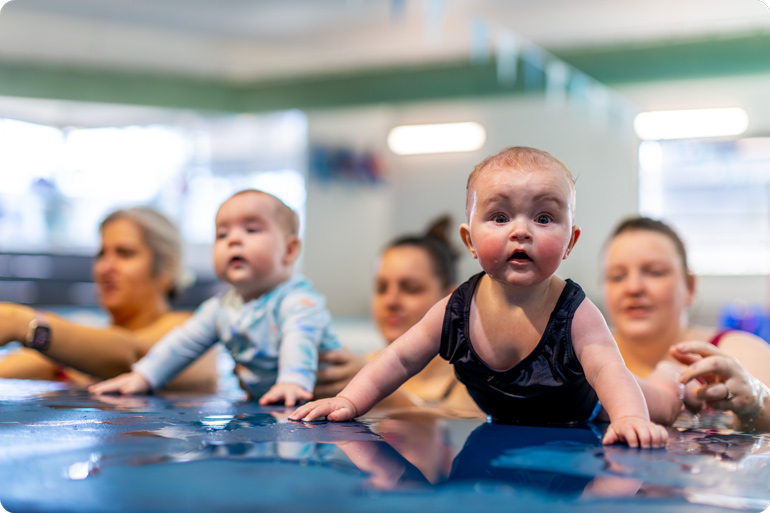
Every parenting group has that thread. The one where someone asks when to start swimming lessons, and 47 people reply with 47 different answers. Three months. Six months. When they can walk. When they stop being scared. When YOU stop being scared.
Here’s the thing nobody tells you before your child’s first swimming lesson. It’s not the water you need to prepare for. It’s the juggling act around the lesson. The bags, the towels, the change rooms and the inevitable forgotten undies (or item). The realisation that a regular nappy is absolutely not the same as a swim nappy. Getting the prep right means your child arrives calm, comfortable and ready to actually enjoy being in the water, not recovering from the getting-there.
So here’s the actual answer, and it comes in the form of a checklist. No winging it required.
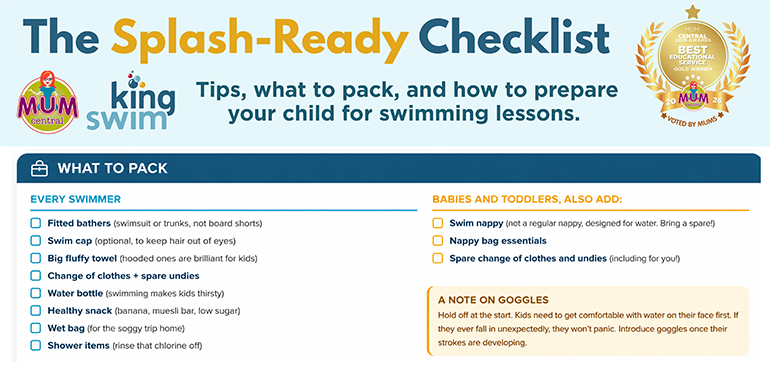
⬇️ DOWNLOAD YOUR FREE COPY HERE ⬇️
Print it, stick it on the fridge or pop it in the swim bag and never forget the swim nappy again.
1. How old do you have to be to start kids’ swimming lessons?
Younger than you think.
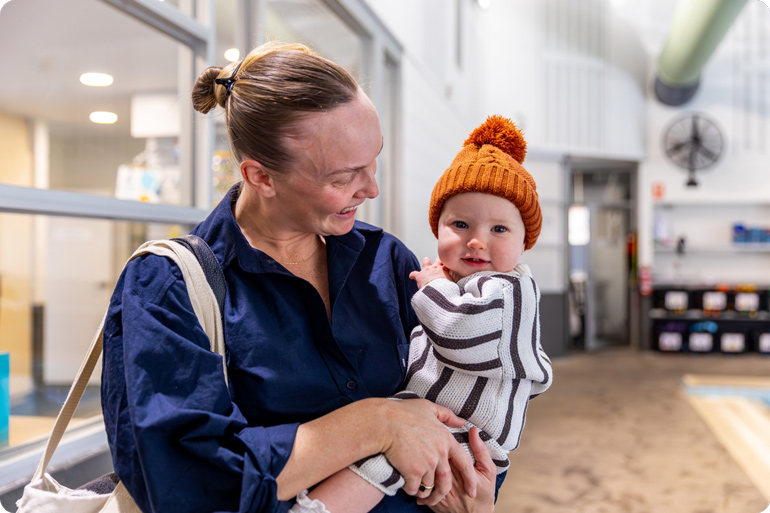
Babies as young as 12 weeks can start in the water. At Kingswim, that kicks off with their foundation swimming lesson levels. Baby Play classes for 3 to 6-month-olds, which are all about water familiarisation and sensory play in a warm, welcoming pool. From 6 months, Parent and Child classes introduce real swimming and water safety skills in a structured way.
The pool water at Kingswim is 32° all year round. So, the whole “we’ll start in summer” plan? Your little one is ready long before the weather is, lessons don’t need to wait for summer.
Readiness for swimming lessons is about your child’s developmental stage, not what’s happening outside. And here’s the kicker: the 0-5 age window is when kids learn faster than at any other point in their lives. Every moment in the water during these years is a moment well spent.
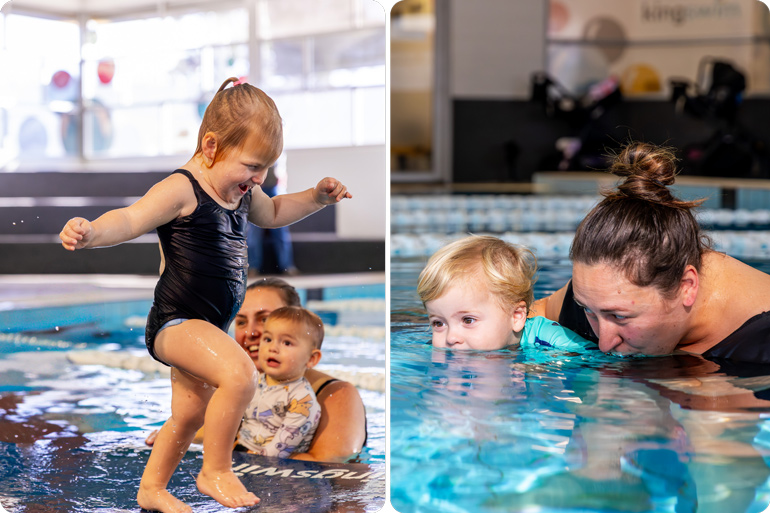
2. Is my child ready? Here’s what to look for
- Babies 3-12 months: If your baby is at least 12 weeks old, they’re ready. You’ll be in the water with them the whole time anyway.
- Toddlers 1-3 years: Look for general curiosity about water and a willingness to be held in it. Some weeks will be brilliant. Others will involve a full meltdown on the pool steps. Both are normal.
- 3 years and up: This is when most kids move to independent lessons without a parent in the water. Look for the ability to follow simple instructions and some interest in what the other kids are doing.
If your child is nervous, watch for: Restlessness, clinging, refusal, avoidance, or just generally acting like you’ve suggested something terrible. This is completely normal. Stay calm, don’t force it, and let them sit on the edge and splash their hands in first. The little steps are the big steps.
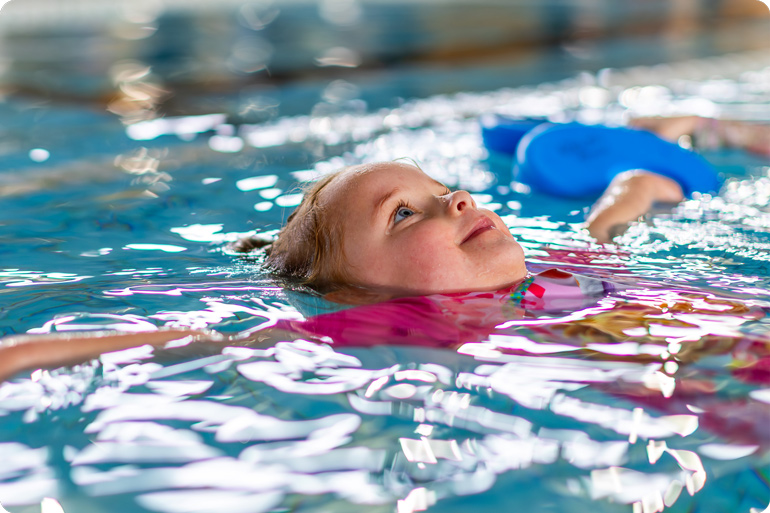
The Kingswim Lesson Stages at a Glance:
| STAGE | AGE | WHAT HAPPENS |
| BABY PLAY | 3-6 months | It’s the first step to a lifetime of enjoying the water together. |
| FOUNDATION | 6 months – 3 years | Parent in water, building confidence and essential water safety skills. Activities include songs and games to keep learning fun! |
| INDEPENDENT BEGINNERS | 3+ years | Beginner lessons without mum or dad, these take place in shallow water, this helps children feel safer and more in control. At these levels children learn body position, kicking, floating as well as life saving skills. |
| COMPETENT | School age | Lessons focus on building endurance, refining stroke technique and transitioning from shallow to deep water. |
| GRADUATE | By age 12 | These levels meet National Benchmarks for Swimming and Water Safety that all children should reach by aged 12 (Grade 6) |
Not sure which level fits? Kingswim offers a FREE TRIAL LESSON with no lock-in contracts. Try it, see how it goes, no pressure.
The Swim Bag Checklist: What to Actually Pack
Whether your child is 3 months or 8 years old, this checklist has you covered — from what to pack to how to prepare
Pack the night before. Seriously. Doing this in the car park is a special kind of chaos.
Every swimmer needs:
✅ Fitted bathers: Swimsuit, swim trunks or Speedos. Not board shorts, they drag in the water and slow everything down
✅ Swim cap: Keeps hair out of eyes, builds a good habit early. (Not necessary, but optional for older children)
✅ Big fluffy towel: Hooded ones are gold for little kids, they double as a cape and a warm wrap
✅ Change of clothes and spare undies (including for you!)
✅ Water bottle: Swimming makes kids surprisingly thirsty despite being surrounded by water
✅ Healthy snack for after: Banana, muesli bar, something that isn’t pure sugar
✅ Wet bag: For the soggy aftermath on the way home
✅ Shower items: Rinse off the chlorine before you leave
For babies and toddlers, add:
✅ Swim nappy (not a regular nappy). Regular nappies absorb too much water and turn into a disaster. Swim nappies are built for this. Bring a spare
✅ Nappy bag essentials
✅ A spare outfit for baby AND yourself. If you arrive in bathers, don’t forget underwear to change into!
RE: Goggles: Hold off on these at the start. Kids need to get comfortable with water on their face first, so if they ever fall in unexpectedly, they don’t panic. Once their strokes are developing, goggles are great. But not yet.
Before the First Lesson: What to Do at Home
This week:
- Talk about swimming, it’s something fun – not something to brace for
- Read a book about the water or the pool together
- Make bath time the practice run – sprinkle water over their head, blow bubbles, splash around
- Let your child pack the swim bag the night before. They will love this job more than you expect
On lesson day:
- Arrive 10-15 minutes early so nobody’s rushing through getting changed
- Feed them at least an hour before, not right before
- Bathroom stop before getting in the pool. Non-negotiable
- If they’re nervous, sit on the edge together and let them feel the water on their hands and feet before anyone mentions getting in
Swim Parent Tips: What Actually Helps
DO THIS:
- Celebrate every win – even just getting in the water is worth a clap
- Back the teacher up – if your child sees you questioning the method, they’ll question it too
- Keep lessons consistent – progress is quiet and cumulative, and it’s easy to miss if you’re skipping regularly
- Talk about what they did in the car on the way home
SKIP THIS:
- Comparing your child to the kid in the next lane who’s already doing freestyle
- Pushing past what they’re ready for – it breeds more anxiety, not less
- Ditching lessons when enthusiasm dips – that flat patch is usually right before something clicks
And if YOU are tired and not feeling the drive to lessons? Put some music on in the car, make it fun on the way there, and grab a coffee to drink while you watch. The days when you almost didn’t go are often the ones when something brilliant happens in the water.
Why Swimming Lessons Shouldn’t Wait Until Summer
Drowning is a year-round risk in Australia, and water respect isn’t something kids are born with. It’s built, lesson by lesson, term by term. The pool water at Kingswim is warm all year. And the skills that keep kids safe, floating, treading water, knowing not to panic, take time and repetition to build. They can’t be crammed in during October before the school swimming carnival.
With over 30 years of experience and more than 2 million people taught to swim, Kingswim’s nationally qualified teachers run small classes with real individual attention. Your child isn’t just one of a crowd.
Start now. Not in summer. Now.
Ready to book?
Kingswim offers a FREE TRIAL LESSON, NO LOCK-IN CONTRACTS & NO PRESSURE. Just find your nearest centre and see how your child goes in the water. Kingswim offers 16 swim centre locations across VIC, ACT and NSW. Find your nearest Kingswim below.

This post is brought to you by Kingswim